

Our commitments
Cycling is the very architype of the ultimate “Green” sport and means of transport
The Tour de Romandie has now been committed to sustainable development for some years.
Cycling already enjoys a “green” image in public opinion and represents the very architype of the “ecological” sport and means of transport par excellence.
It is not merely to follow current trends or to meet the demands and requirements of the sponsors, stage towns, cantons, the UCI or the IOC (which is enforcing the principles of sustainability throughout Olympic projects) that the Tour de Romandie is focusing on this field, but because compliance with the principles of sustainability is a universal duty, and even more so for the most important sporting event in French-speaking Switzerland.
From 2009, in particular with a study conducted with the AISTS (International Academy of Sport Science and Technology), the Tour de Romandie put in place different measures to plan and develop its work in the field of sustainable development.
The initial emphasis was put on waste management and transport development.
©TristanKZmedias
For waste management, the main goals were to:
• Reduce waste generation;
• Recover and selectively sort waste;
• Reinforce education and awareness of waste management.
• Involve the various actors (towns at the stage of the project, the road service, partners and sponsors), by organizing areas for selective waste sorting, and also implement an education campaign in order to be able to achieve the desired objectives.
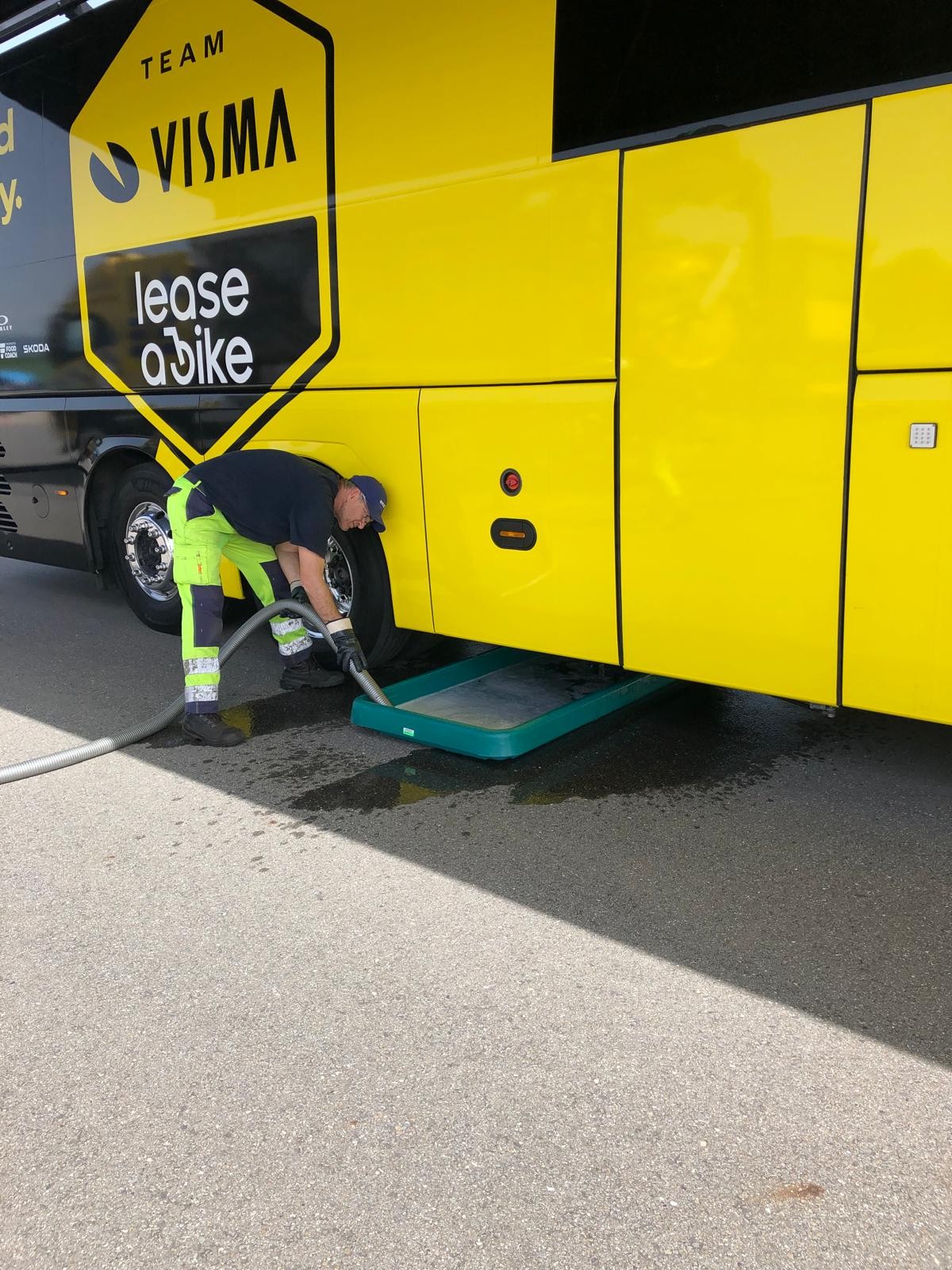
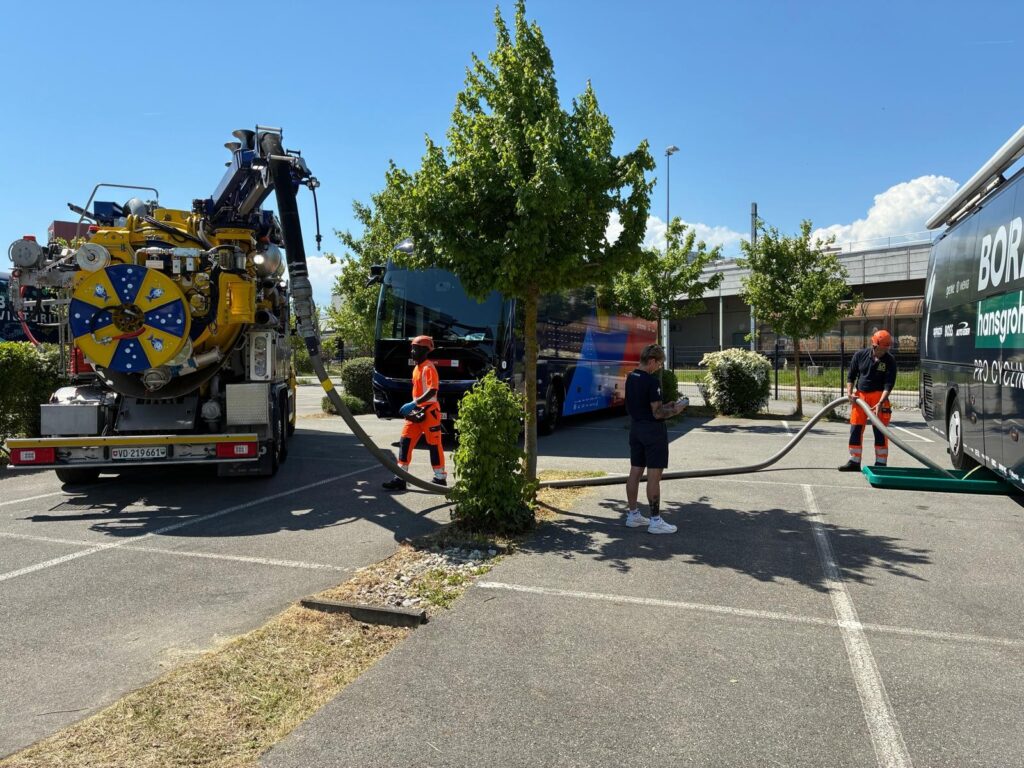
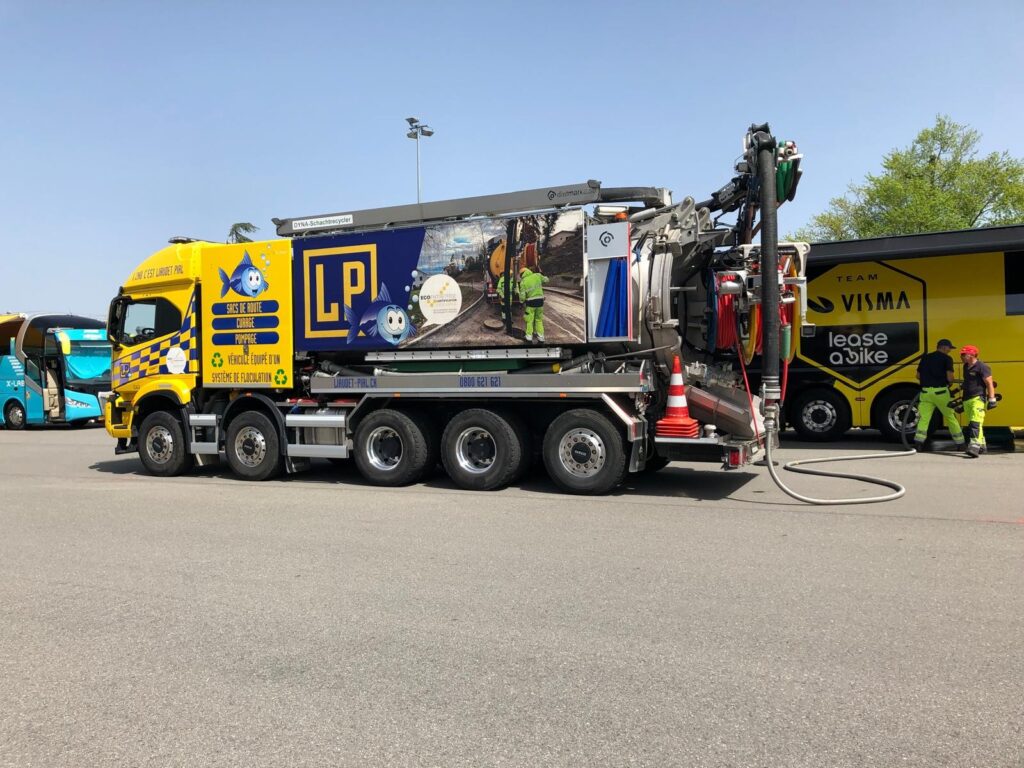
For the management of team buses:

Return, in summary, from the provider Liaudet Pial regarding the management of the teams» cars during the 2026 edition. The organization of this management took place according to the following main points:
- Locality surveys before intervention by Francis Troillet;
- Selection of the appropriate vehicle;
- Formation of a team of 2 people: driver + assistant;
- Iintervention and pumping;
- Transition to STEP;
- Waste water evacuation.
For transport development, the main goals were to:
• Promote soft mobility, car-sharing and public transport;
• Minimise traffic and resolve parking problems;
• Reduce the negative impact of transportation on the environment (CO2);
• Reinforce education and awareness with regard to mobility and health.
• It was possible to achieve these goals by encouraging the public to travel by bike or public transport, giving associations working in the field the opportunity to make a name for themselves, involving local clubs in the implementation of concrete measures (organising secure bike parking) or insisting on the beneficial effects of physical exercise on health and well-being.
The environmental aspects (reduction of the ecological impact of waste and transport), social aspects (health promotion, integration of local communities, etc.) and economic aspects (integration of local public transport companies, reduction of costs, economic and tourist promotion, etc.) were fully considered through these two initiatives.
The Tour de Romandie is constantly working to develop more initiatives so that the principles of sustainable development are applied and expanded upon as part of the event.
The Tour de Romandie Foundation is now an active member of the UCI Climate Action Charter.
For the development of the movement among young people, the main objectives were to:
- Promote the movement and cycling among young people through the Ptit Tour;
- To bring the backstage and the atmosphere of the Tour de Romandie to the public;
- Involving young people in a non-timed mini-parade on a part of a professional race course;
- Give the opportunity to the young people to get on the podium for a photo session before the official ceremony;
- Offer young people the opportunity to follow the end of the race in privileged conditions.
For the development of professional integration:
The Tour de Romandie Foundation collaborates actively with the Broyard La Rosière Foundation. This Foundation supports people with disabilities in their daily lives and in their integration into professional life.
Thus, the main objectives of this collaboration were primarily to entrust them with the subcontracting of certain tasks by offering them:
- appropriate and rewarding tasks;
- logistical tasks aimed at relieving and assisting the organization of the Tour de Romandie, such as managing the packing of the staff’s clothing.